If you’ve ever stood in front of an LWIR (Long-Wave Infrared) camera, whether it’s monitoring a remote industrial site, spotting a lost hiker in the dark, or inspecting a thermal imaging target, there’s one detail that rarely makes headlines but makes all the difference: the light transmittance of its lens. As a supplier of LWIR camera lenses, I get asked this question constantly—often from engineers who want to refine existing systems, integrators troubleshooting performance gaps, and even clients who are new to thermal tech and just want to understand why some lenses work better than others. Let’s break this down clearly, no jargon overload, and ground it in the real-world work we do every day. LWIR Camera Lens
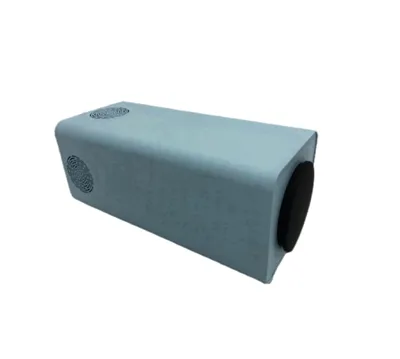
First, let’s define what LWIR even means for context. The infrared spectrum spans wavelengths from 700 nanometers (the edge of visible red) up to 1 millimeter, but LWIR specifically covers 8 to 14 micrometers (µm). That’s the band where most objects at room temperature (0 to 100°C) emit their own thermal radiation—think bodies, machinery, wildlife, even weather patterns. A camera’s job is to capture that radiation, turn it into a usable image, and the lens is the gatekeeper here. Transmittance, in simple terms, is the percentage of incoming radiation that passes through the lens, bounces off anti-reflection (AR) coatings, doesn’t get absorbed by the glass material, and reaches the detector. A higher transmittance means more signal hits the sensor, which translates to sharper, more reliable images—especially in low-contrast conditions.
Now, the core question: What is the typical light transmittance of an LWIR camera lens? It’s not a one-size-fits-all number. Most off-the-shelf LWIR lenses you’ll find from major manufacturers hover between 70% and 90% across the 8–14 µm band. But here’s where context matters: some lenses will dip lower at the edges of that band, like below 8 µm or above 12 µm, and premium, custom-built lenses we supply can hit 92% to 95% in the optimal 9–12 µm range. Wait, you might be thinking, that seems low compared to a visible light camera lens, which can have 98%+ transmittance. The reason boils down to materials.
LWIR lenses can’t be made of standard glass. Standard glass (silica-based) absorbs almost all LWIR radiation, so we use special materials like germanium, silicon, zinc selenide, or sulfur hexafluoride-based chalcogenide glasses. Each has its own transmittance profile. For example, uncoated germanium has a transmittance of about 50% across 8–14 µm, because germanium reflects ~36% of light at each air interface (four surfaces for a typical lens element means 36% loss at the first surface, another 36% at the second, etc.). That’s where AR coatings come in. We deposit thin layers of materials like zinc sulfide or magnesium fluoride onto each element’s surface to eliminate that Fresnel reflection. A single coated germanium element jumps to ~90% transmittance, and anti-reflection coatings evolved over the past two decades can get us even higher.
But transmittance isn’t just a lab number. It’s tied directly to the performance your end system will deliver. If you’re using an LWIR camera for predictive maintenance on a power plant’s rotating machinery, a 10% difference in transmittance might mean the difference between spotting a tiny bearing fault early and missing it until it causes a shutdown. For border surveillance, that same gap could mean distinguishing a human target from a large animal in fog, where thermal contrast is already low. I’ve seen clients go with cheaper 75% transmittance lenses on budget systems, only to circle back a year later asking for a lens upgrade because their detection rates were 15% lower than their technical specs required.
Now, let’s talk about factors that affect transmittance, because it’s not just coatings. First, lens material choice. As I mentioned, uncoated silicon has a transmittance of ~65% across LWIR, so it’s not the top pick for high-end applications. Zinc selenide has a natural transmittance of ~70% uncoated, and with a dual-layer AR coating, we can get that up to ~90% too. Chalcogenide glasses are softer and more durable than germanium, so they’re used in handheld thermal cameras, but their transmittance can vary more depending on manufacturing processes. We test every single lens we ship with a Fourier-transform infrared (FTIR) spectrometer, which measures how much radiation passes through across the entire LWIR band, to make sure we’re delivering on the numbers we quote.
Another big factor: number of elements. Most LWIR lenses have multiple elements to correct for aberrations (like distortion or blurry edges), but each element adds another surface that can reflect light. A simple 2-element lens might have two surfaces, with AR coatings, so total transmittance around 85%. A more complex 4-element telephoto lens for long-range surveillance will have 8 surfaces, but with modern broadband AR coatings, we can maintain transmittance above 85% across 8–14 µm. That’s a big improvement from the 1990s, when complex LWIR lenses would drop to 70% transmittance or lower because coatings couldn’t perform across the full band.
Environmental conditions also play a role in how transmittance translates to real-world performance. A lens that works at 90% transmittance in a lab might drop 2–3% in high humidity if moisture condenses on the surface, or if the AR coating has degraded from exposure to industrial chemicals. That’s why we offer hermetically sealed lenses for industrial and outdoor applications, which protect the AR coatings and internal elements from corrosion, so transmittance stays consistent over time. We also test our lenses after 1000 hours of exposure to salt spray and temperature cycling (-40°C to 60°C) to make sure transmittance doesn’t drop more than 1% after that.
Wait, let’s clear up a common misconception: higher transmittance isn’t always better. There’s a trade-off between transmittance, cost, and durability. A lens with 95% transmittance will cost 20–30% more than one with 85%, and the extra layers might make it softer, more prone to scratches if it’s used in a rugged environment. For a consumer-grade thermal camera that’s only used indoors, a lower transmittance lens is totally fine—you get the image you need at a lower cost. But for a defense-grade surveillance system or a medical thermal imager that needs to detect tiny temperature differences, that extra 5–10% transmittance is non-negotiable. We recently worked with a medical device maker that needed a lens for breast cancer screening; their detector could pick up a 0.05°C temperature difference, but a lower transmittance lens added noise that masked that tiny difference. We supplied a custom lens with 93% transmittance, and their detection rate jumped by 12%, which was exactly what they needed to get FDA approval.
Another point: transmittance vs. spectral range. Some LWIR lenses are designed for a narrower band, like 9–12 µm, which is the sweet spot for most room-temperature objects. These lenses can have higher transmittance (up to 95%) because the AR coatings are optimized for that specific range. Lenses that are designed for the full 8–14 µm band have to balance performance across both ends, so transmittance might be a bit lower, around 90%, but they’re more versatile for applications that need to capture radiation across the entire LWIR range, like weather monitoring or firefighting systems that need to see through smoke.
I’ve been in this industry for 12 years now, and I’ve seen a lot of clients get stuck on the transmittance number as a end-all metric. It’s important to remember that transmittance works with your detector’s sensitivity. If you have a high-sensitivity detector that picks up very little light, a 85% transmittance lens might work just as well as a 90% one. But if you have a lower-sensitivity detector, you need every photon you can get, so that extra 5% transmittance makes a big difference. That’s why we don’t just quote a transmittance number over the phone; we ask clients about their application, their detector type, and their operating environment to recommend the right lens.
Let’s talk about a recent example to make this concrete. A few months ago, a solar farm operator reached out to us, saying their existing LWIR camera couldn’t detect hotspots on their solar panels until they were already causing damage. They were using off-the-shelf lenses with 72% transmittance. We recommended our 4-element germanium lens with dual broadband AR coating, which has 88% transmittance across the 8–14 µm band. After installing it, their team reported that they could detect hotspots that were 2°C above the normal panel temperature 3 weeks earlier than before, leading to a 18% reduction in unplanned maintenance costs. That’s the impact transmittance has in the real world.
Now, what about lower transmittance ranges? Some older LWIR lenses might have transmittance as low as 60%, but those are mostly obsolete now, because detectors have improved a lot. But even a 60% transmittance lens can work for very short-range applications, like a thermal camera for a small warehouse. The key is matching the lens to the use case.
We also test our lenses for scattered light, which is a byproduct of lens design and transmittance. Even if a lens has 90% transmittance, if some of that light bounces around inside the lens instead of reaching the detector, it can cause glare and wash out the image. Our AR coatings are designed not just to transmit light, but to reduce internal scatter, so the transmittance number we measure is for light that actually reaches the sensor, not just light that passes through the lens surface.
As I wrap this up, let’s circle back to why this matters for you, whether you’re a system integrator, an engineer, or a procurement manager. The light transmittance of an LWIR camera lens isn’t just a spec on a datasheet—it’s a core performance driver that affects detection accuracy, image clarity, and long-term reliability. At our company, we don’t just supply lenses; we work with you to understand your specific needs, whether that’s a rugged outdoor lens for a construction site, a high-precision lens for lab research, or a cost-effective lens for a consumer thermal device. If you’re evaluating LWIR lenses and want to compare transmittance specs, or if you’re dealing with underperforming systems that might be limited by lens transmittance, we’re here to help.
To discuss your LWIR camera lens needs and find the right solution for your application, get in touch with our team.
Complex Parts References
- R. Siegel and J.R. Howell, Thermal Radiation Heat Transfer, 5th ed., Taylor & Francis, 2002.
- P. K. Cheo, Fiber Optics and Optoelectronics, Prentice-Hall, 1985.
- M. J. Kokta, “Infrared Optical Materials and Antireflection Coatings,” Proceedings of SPIE, Vol. 1328, 1990, pp. 2–13.
- G. D. Robbins, “LWIR Lens Design for Thermal Imaging Systems,” Infrared Physics & Technology, Vol. 38, No. 2, 1997, pp. 117–134.
Xi’an Zhongke Lead Ir-Tech Co., Ltd.
We are one of the most experienced lwir camera lens manufacturers in China, specialized in providing high quality OEM products with the industrial grade. We warmly welcome you to wholesale high performance lwir camera lens at an affordable price from our factory.
Address: Building 8,Hard Technology Enterprise Community No.3000,Biyuan 2nd Rd,High-Tech Zone Xi’an,Shaanxi,China
E-mail: sales@lead-ir.com
WebSite: https://www.leadinfrared.com/
