Can a heat exchanger be used for waste heat recovery? Heat Exchanger
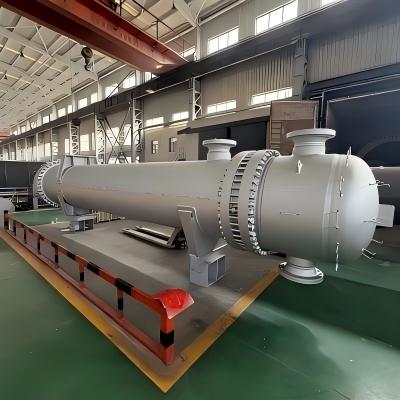
As a heat exchanger supplier, I’ve witnessed firsthand the growing interest in waste heat recovery and the significant role that heat exchangers can play in this area. In this blog post, I’m going to explore whether a heat exchanger can indeed be used for waste heat recovery, the benefits of doing so, the types of heat exchangers suitable for this purpose, and discuss some real – world applications.
The Feasibility of Using Heat Exchangers for Waste Heat Recovery
In essence, the concept of waste heat recovery is to capture and reuse the heat that would otherwise be wasted from industrial processes, power generation, or other sources. A heat exchanger is a device that transfers heat from one fluid (the hot fluid, which may contain waste heat) to another fluid (the cold fluid) without the two fluids coming into direct contact.
The working principle of a heat exchanger makes it highly suitable for waste heat recovery. Whether it’s a shell – and – tube heat exchanger, a plate heat exchanger, or a finned – tube heat exchanger, they all operate on the basis of heat transfer. When the hot fluid with waste heat passes through one side of the heat exchanger and the cold fluid passes through the other side, heat is transferred from the hot fluid to the cold fluid. This transferred heat can then be used for various purposes, such as pre – heating feedwater in a boiler, heating a building, or powering other industrial processes.
Benefits of Using Heat Exchangers for Waste Heat Recovery
Energy Efficiency Improvement
One of the most significant benefits is the improvement in energy efficiency. By recovering waste heat, industries can reduce their reliance on primary energy sources. For example, in a manufacturing plant, the waste heat from a high – temperature exhaust gas can be used to pre – heat the incoming air or raw materials. This reduces the amount of energy needed to heat these substances to the required processing temperature, resulting in lower fuel consumption and cost savings.
Environmental Impact Reduction
The reduction in energy consumption also has a positive impact on the environment. Less use of fossil fuels means lower greenhouse gas emissions. In addition, waste heat recovery can help industries meet environmental regulations by reducing the amount of heat released into the atmosphere, which can contribute to local heat island effects.
Cost Savings
From a financial perspective, waste heat recovery using heat exchangers can lead to substantial cost savings. The initial investment in a heat exchanger system is often offset by the long – term savings in energy costs. For large – scale industrial operations, these savings can be in the millions of dollars over the lifespan of the heat exchanger.
Types of Heat Exchangers for Waste Heat Recovery
Shell – and – Tube Heat Exchangers
Shell – and – tube heat exchangers are widely used in waste heat recovery applications. They consist of a shell (a large cylindrical vessel) and a bundle of tubes. The hot fluid with waste heat can flow through the tubes, while the cold fluid flows through the shell. This design allows for a large heat transfer area, making it suitable for high – temperature and high – pressure applications. For instance, in a power plant, shell – and – tube heat exchangers can be used to recover waste heat from the exhaust steam and transfer it to the feedwater, increasing the overall efficiency of the power generation process.
Plate Heat Exchangers
Plate heat exchangers are another popular choice for waste heat recovery. They are made up of a series of thin plates with channels for the hot and cold fluids. The plates are stacked together, and the fluids flow through alternate channels. Plate heat exchangers have a high heat transfer coefficient, which means they can transfer heat more efficiently in a relatively small space. They are often used in applications where space is limited, such as in food and beverage processing plants. In these plants, waste heat from the pasteurization process can be recovered using plate heat exchangers to pre – heat incoming raw materials.
Finned – Tube Heat Exchangers
Finned – tube heat exchangers are designed with fins on the outside of the tubes to increase the heat transfer area. This makes them particularly suitable for applications where the heat transfer coefficient of one of the fluids is low, such as in gas – to – liquid heat transfer. In industrial waste gas treatment, finned – tube heat exchangers can be used to recover waste heat from the hot exhaust gases and transfer it to a liquid, such as water.
Real – World Applications of Heat Exchangers in Waste Heat Recovery
Industrial Manufacturing
In the steel industry, large amounts of waste heat are generated during the steelmaking process. Heat exchangers can be used to recover this waste heat from the exhaust gases of furnaces and use it to pre – heat the combustion air. This not only reduces the energy consumption of the furnaces but also improves their performance.
In the chemical industry, many chemical processes produce high – temperature waste streams. Heat exchangers can recover the heat from these streams and use it for distillation, evaporation, or other unit operations, reducing the need for external energy sources.
Power Generation
Power plants, whether they are coal – fired, gas – fired, or nuclear, generate a significant amount of waste heat. Heat exchangers can be used to recover this heat from the condenser cooling water or the exhaust gases. The recovered heat can be used for district heating, which provides heat to nearby buildings, or for other industrial processes in the vicinity of the power plant.
Food and Beverage Industry
In the food and beverage industry, processes such as pasteurization, cooking, and sterilization generate a large amount of waste heat. Heat exchangers can recover this heat and use it for pre – heating water or for other thermal processes within the plant. This helps to reduce energy costs and improve the overall sustainability of the production process.
Challenges and Considerations
While heat exchangers are a powerful tool for waste heat recovery, there are some challenges and considerations that need to be taken into account.
Contaminant and Fouling
The waste heat source may contain contaminants, such as dust, particles, or chemicals. These contaminants can deposit on the heat exchanger surfaces, reducing the heat transfer efficiency. Regular cleaning and maintenance of the heat exchangers are required to prevent fouling.
Compatibility of Fluids
The hot and cold fluids used in the heat exchanger must be compatible. For example, if the waste heat source contains corrosive substances, the heat exchanger materials must be selected to resist corrosion. Otherwise, the heat exchanger may be damaged, leading to leakage and reduced performance.
System Design
The design of the waste heat recovery system, including the heat exchanger, piping, and control systems, must be carefully planned. Factors such as the flow rates, temperature differences, and pressure drops of the fluids must be considered to ensure optimal performance of the system.
Conclusion
In conclusion, heat exchangers can definitely be used for waste heat recovery. Their ability to transfer heat from a hot fluid with waste heat to a cold fluid makes them an ideal choice for capturing and reusing this otherwise wasted energy. The benefits, including energy efficiency improvement, environmental impact reduction, and cost savings, are significant.
There are different types of heat exchangers suitable for different waste heat recovery applications, and they are being widely used in various industries such as manufacturing, power generation, and food and beverage. Although there are challenges such as fouling, fluid compatibility, and system design, with proper planning and maintenance, these can be overcome.

If you are interested in waste heat recovery for your industrial processes and are looking for a reliable heat exchanger solution, I encourage you to reach out to us. We have a wealth of experience and a wide range of heat exchanger products to meet your specific needs. Contact us to start a discussion about how we can help you achieve your waste heat recovery goals and optimize your energy usage.
Heat Exchanger References:
- Incropera, F. P., DeWitt, D. P., Bergman, T. L., & Lavine, A. S. (2019). Fundamentals of Heat and Mass Transfer. John Wiley & Sons.
- Shah, R. K., & Sekulic, D. P. (2003). Fundamentals of Heat Exchanger Design. John Wiley & Sons.
- Kröger, D. G. (2004). Compact Heat Exchangers: Selection, Rating, and Thermal Design. CRC Press.
Shandong Meiling International Trading Co., Ltd.
We are one of the most professional heat exchanger manufacturers and suppliers in China, featured by quality products and good service. Please feel free to wholesale advanced heat exchanger made in China here from our factory. Customized orders are welcome.
Address: No. 998 Niushan Road, Linzi District, Zibo City, Shandong Province
E-mail: dingxiaoli@sdmeiling.com.cn
WebSite: https://www.ml-heatexchanger.com/
