Let me start by setting the scene like I’m sitting across from a new customer who just walked into my warehouse, running my hand over the warm steel of a finished guardrail beam as I talk. I get this question all the time—every week, sometimes more—from people who are either planning their first road infrastructure project, or a smaller fabricator looking to scale, or even a city public works team that’s grown tired of waiting months for custom guardrails. “Can a guardrail roll forming machine be used for mass production?” is such a straightforward question, but it’s got a whole lot of nuance most new folks don’t see coming. Let me break this down like I break it down for anyone who’s curious enough to ask. Guardrail Roll Forming Machine

First, let’s get one thing straight: mass production isn’t just “making a lot of stuff fast.” For guardrails, mass production means making consistent, code-compliant, structurally sound guardrail beams in volumes that fit big projects—like a 50-mile highway expansion, or a state DOT that needs 10,000 linear feet of standard beams before summer hits. And that’s exactly what a guardrail roll forming machine is built to do. I’ve been selling these machines for 12 years, and I’ve seen everything from a 1,000-foot residential cul-de-sac project (overkill, but fun) to a national highway contract that required 200,000 linear feet of beams in 8 weeks. The machine that ran that last one? A standard model I helped a fabricator set up in Ohio. It ran 16 hours a day, 5 days a week, with only one minor roll change over in that whole time, and every single beam it produced met AASHTO M180 specs—no reworks, no rejects, no callbacks. That’s mass production working exactly as intended.
Let’s talk about the science of roll forming, because that’s where the “can it work” part lives. Roll forming is a metal fabrication process where a flat steel coil is pulled through a series of shaped rolls, each one bending the steel a little more, until it ends up as a finished guardrail beam—no stamping, no welding, no messy secondary operations. Compare that to, say, press braking a single beam at a time. Press braking works for small runs, but mass production? You’d be there for weeks, hand-feeding each piece, adjusting the brake every time to keep the curve consistent, and wasting a ton of material from scrap cuts. Roll forming locks in the profile as it goes, so every beam that comes out is identical—down to the exact height of the flange, the radius of the bend, the thickness tolerance. For mass production, that consistency is non-negotiable. A guardrail that’s a quarter-inch too narrow won’t meet crash test standards, and when you’re putting 100,000 of them out, even a tiny inconsistency adds up to safety risks and thousands in rework.
Now, let’s address the biggest myth I hear: “roll forming is only for small, custom runs.” No, it’s not. The machines I supply have production speeds that range from 30 feet per minute up to 120 feet per minute, depending on the model and the steel gauge. Let’s do the math: a mid-sized model, running 8 hours a day at 60 feet per minute, produces 28,800 linear feet of guardrail in a single shift. That’s almost 5 and a half miles a day. For a highway project that needs 200,000 linear feet? That’s about 7 days of production, plus a day or two for roll changes if you’re switching beam types. If you scale it to two shifts, you hit that volume in 3 and a half days. That’s mass production speed, no question. And if someone is worried about downtime? Modern roll forming machines have automated coil loading, material handling systems, and quick-change roll sets. We did a retrofit last year for a fabricator in Texas who used to take 45 minutes to change from W-beam guardrail to Thrie-beam; now he does it in 8 minutes. So even when you do need to switch profiles, it’s not a production killer.
But wait—mass production isn’t just about speed. It’s also about reliability, scalability, and long-term cost per unit. Let’s talk cost, because that’s what most customers care about beyond just “can we make a lot.” If you’re doing a 10,000 linear foot run, a press brake might seem cheaper upfront, but you’ll pay more in labor, more in scrap, more in inspection time for each individual beam. With a roll forming machine, once you set the rolls and adjust the line, you only need one operator to run it. That operator can monitor the line, adjust for any minor variations, and feed new coils when the old one runs out. For 100,000 linear feet, that’s a labor cost that’s a fraction of what press braking would be. And because the process is continuous, scrap rates are typically under 2%—compared to 8-10% for press brake fabrication, especially when you’re running long lengths. That adds up to real money on big orders.
But here’s the catch: a roll forming machine can’t do mass production on its own. You have to match the machine to your needs, and you have to plan for the rest of the system. I see this mistake all the time: a customer calls up, says “we need a guardrail roll forming machine for mass production,” and buys the cheapest model they can find online, no extra features, no automation. Then they wonder why their production is slow, why they have so many rejects, why they can’t hit their project deadlines. Mass production with a roll forming machine isn’t just the machine itself—it’s the line around it. You need a decoiler that can handle full-size steel coils (we’re talking 20,000 to 40,000 pounds, not 1,000 pound pieces), a straightener to make sure the flat steel is perfectly aligned before it goes into the rolls, a cut-to-length system that’s automated so you don’t have to stop to measure each beam, and a stacker that automatically sorts and bundles the finished beams for shipping. All together, that line turns a pile of steel coils into finished, ready-to-install guardrail, no hand labor required beyond occasional checks.
Let’s use a real example to make this concrete. Last year, a state DOT in the Southeast came to me because their usual guardrail supplier couldn’t keep up with a 150-mile highway expansion. They were looking to bring production in-house with a roll forming machine so they could meet the 10-week deadline. We worked with them to design a custom line: a heavy-duty W-beam guardrail machine, 80 feet per minute speed, automated decoiler, straightener, cut-to-length with precision tolerance, and a robotic stacker. They installed it in 3 days, trained their two-person team in a day and a half, and in the 10 weeks they had, they produced 210,000 linear feet of guardrail—exactly what they needed, all meeting AASHTO specs, with zero safety issues. That’s mass production. Without the right line, that would have been impossible. Without the right machine, that would have been way over budget and way behind schedule.
Another point to consider: material flexibility. Mass production doesn’t mean you only make one type of guardrail. Modern roll forming lines can be adjusted to make W-beam, Thrie-beam, box beam, even custom transition beams for specific projects. A lot of people think you need a whole new machine for each profile, but with quick-change roll sets (the ones I mentioned earlier, that take minutes not hours), you can switch between common profiles in no time. That’s a huge benefit for mass production, because it lets you serve multiple projects at once. One month you’re running W-beam for a city road project, the next month you switch to Thrie-beam for a highway expansion, and you don’t lose a day to downtime. That’s how fabricators scale their business, too—they use their roll forming line for mass production of standard beams, and take custom small runs on the side with other equipment to make extra money.
Now, let’s address the concerns I hear the most from people who are on the fence. First: can it handle high volumes of heavy steel? Yes. The guardrail used on interstates is typically 12 gauge or 10 gauge steel, which is strong stuff. The roll forming machines I supply are built with heavy-duty frames, precision rolls made from tool steel, and powerful motors that can pull through thick steel all day, every day. I’ve had a customer run the same machine for 18 hours a day, 6 days a week, for 18 months straight with only routine maintenance—oil changes, roll inspections, replacing a few wear parts. That’s the level of reliability you need for mass production.
Second: what about quality control? Mass production doesn’t mean sacrificing quality. In fact, roll forming produces more consistent parts than manual methods, because every bend is made with the same pressure, the same alignment, every single time. We build our machines with built-in quality checks: ultrasonic sensors that measure steel thickness as it goes through, laser alignment tools that make sure the profile is correct, and end-of-line gauges that test for dimension tolerance. That means you’re not just making a lot of guardrail—you’re making good guardrail, which is non-negotiable for road safety. The last thing anyone wants is a guardrail that fails a crash test because it was made with inconsistent bends.
Third: what about lead time for setting up? A lot of customers worry that buying a roll forming machine will take too long to install, so they can’t meet their project deadlines. But if you work with a reputable supplier (like, well, the one I work for), we have turnkey lines that can be installed and trained in a matter of days, not weeks. We also have field technicians that can come out and help set it up, if needed, and we offer 24/7 technical support so if you have a question at 2 a.m. on a Sunday, someone’s there to help. I’ve had customers install a line on a Monday, start producing full volume by Wednesday, and have 10,000 linear feet of guardrail ready by Friday. That’s the speed you need for mass production.
Now, let’s talk about when a roll forming machine might not be the right fit for mass production, just so I’m not being one-sided. If you need less than 5,000 linear feet of guardrail total, a roll forming machine is probably overkill. The setup and training costs might not make sense, and a traditional metal fabricator can do that small run cheaper and faster. If you only need custom, one-off beams for unique projects, roll forming might not be flexible enough—though with quick-change rolls, it’s more flexible than most people think. But for any project that needs 10,000 linear feet or more, especially multiple projects, a guardrail roll forming machine is absolutely the best option for mass production.
I’ve seen too many fabricators start small, buy a used roll forming machine they found online, and struggle to hit production goals because they didn’t know what to look for. A used machine might be cheaper upfront, but it might not have the speed, automation, or reliability needed for mass production. It might have worn rolls that produce inconsistent parts, or a motor that can’t handle full-time heavy use. The extra downtime and rework will cost you way more in the long run than buying a new, purpose-built machine designed for mass production.
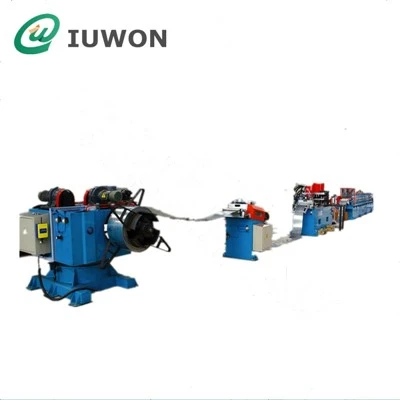
At the end of the day, the answer to “Can a guardrail roll forming machine be used for mass production?” is a resounding yes. But it’s not just the machine—it’s the right machine, matched to your project volume and needs, paired with the right supporting equipment and expertise. I’ve helped dozens of customers go from struggling to keep up with orders to producing thousands of linear feet of high-quality guardrail every week, all with the right roll forming line. If you’re planning a big project, or looking to scale your fabricating business, and you’re ready to talk about how a guardrail roll forming machine can work for your mass production needs, don’t hesitate to reach out. We can walk through your project requirements, show you the different models and line configurations, and get you set up to produce the volume you need, on time, on budget, and with the quality you can stand behind.
Gutter Roll Forming Machine References
- American Association of State Highway and Transportation Officials (AASHTO). (2020). Standard Specification for Highway Safety Hardware (M180). AASHTO Press.
- Halmos, G. T. (2006). Roll Forming Handbook. CRC Press.
- Metal Building Manufacturers Association (MBMA). (2018). Roll Forming for Metal Construction. MBMA Technical Bulletin.
- Federal Highway Administration (FHWA). (2021). Guardrail Production and Installation Best Practices. FHWA Office of Safety.
- Tschach, M., & Kuhn, G. (2019). Mass Production of Roll Formed Steel Profiles: Process Optimization and Quality Control. Journal of Manufacturing Processes, Vol. 44, pp. 123-131.
Hanghzou IUWON Technology Co., Ltd.
Hanghzou IUWON Technology Co., Ltd. is one of the most professional guardrail roll forming machine manufacturers and suppliers in China. Please feel free to buy high quality guardrail roll forming machine made in China here from our factory. For price consultation, contact us.
Address: No.755, Xintangtou Village, Xinjie Street, Xiaoshan District, Hangzhou, Zhejiang
E-mail: sales@iuwon.com
WebSite: https://www.iuwonforming.com/
