If you’ve ever stood next to a CNC machining center running a batch of aerospace components, or held a custom medical device part that fits perfectly into its intended assembly, you’ve felt the quiet, constant weight of tolerance in metal machining. For over a decade, I’ve run a small CNC metal machining shop that serves industries from automotive to renewable energy, and I’ll be the first to say tolerance isn’t just a tiny number on a technical drawing—it’s the foundation that turns raw metal billets into parts that work, and the difference between a project that runs smoothly and one that costs thousands in rework, delays, and lost trust. CNC Metal Machining
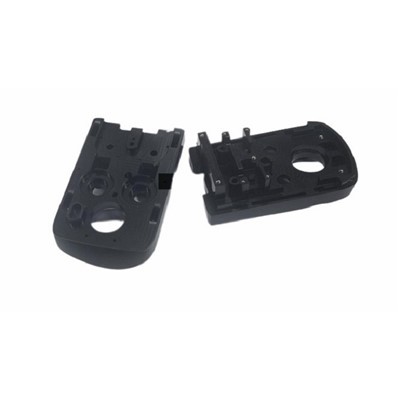
Let’s start with the basics, because so many people outside our industry see tolerance as just another engineering buzzword. In CNC machining, tolerance is the maximum allowable deviation from a part’s specified dimension, right? If a drawing says a bracket needs to be 10mm thick, and the tolerance is ±0.02mm, that means I can machine it anywhere between 9.98mm and 10.02mm and it’s considered correct. Simple enough, but when you’re talking about parts that lock together, hold pressurized fluid, or spin at 10,000 RPM, that tiny gap isn’t trivial.
Early in my career, I learned this the hard way. We had a client in the agricultural equipment space that asked for 500 steering knuckles for a new line of tractors. The engineering team on their end specified a tolerance of ±0.1mm for the knuckle’s pivot bore, but at the time, our shop was still using older mills that could only consistently hold ±0.05mm. We quoted the job, cut the knuckles, and shipped them confident we’d delivered on specs. A week later, they called in a panic—half the knuckles wouldn’t fit their steering column assemblies. The problem? The column’s mating bore had a tolerance of ±0.05mm. When we ran our knuckles at the top end of our capacity, they sat just outside the mating bore’s range, creating a friction point that would have worn out the steering system in months. We ate the cost of reworking every single part, adjusted our quoting process to explicitly call out tolerance capabilities for every job, and that mistake taught me something I still pass on to every machinist I hire: tolerance isn’t something we adjust after the part is made—it’s a core specification that shapes every step of our process.
That story isn’t just a business regret; it’s proof of how tolerance acts as a cross-language between design, manufacturing, and end-use performance. For aerospace, tolerance is non-negotiable. A turbine blade for a jet engine has to fit into its housing with a tolerance of thousandths of a millimeter—too tight, and the blade will rub at high speeds, causing overheating and catastrophic failure; too loose, and hot exhaust will leak around the blade, reducing engine efficiency by 10% or more. When NASA works with CNC suppliers for rocket components, they don’t just ask for a specific length—they rely on tolerance to ensure that thousands of individual parts fit together into a system that works in the extreme environment of space. Every gap, every sharp edge, every dimension that deviates from spec is a risk.
But tolerance isn’t just about avoiding disasters—it’s also about balancing what’s possible on the shop floor with what’s required for the part to function. I’ve seen clients ask for impossibly tight tolerances on parts that don’t need them, driving up our machining time and their costs for no reason. Last year, a medical device startup came to us with a custom bone screw that was designed for spinal fusion surgery. Their initial drawing called for a thread pitch tolerance of ±0.005mm, which is extremely tight for threads that are only a few millimeters wide. After discussing their design, we realized that the screw’s only function was to lock into a matching plate, and the thread only needed to be consistent enough to avoid cross-threading during implantation. We worked with their engineering team to adjust the tolerance to ±0.02mm, which still ensured the screw worked as intended, but cut our production time per screw in half and saved them 30% on their total order. That conversation highlighted a key truth: tolerance is a collaborative choice, not a one-size-fits-all number.
For our CNC machining operation, tolerance also defines our capabilities and our reputation in the industry. We invest in high-precision CNC mills and lathes—tools that can hold tolerances as tight as ±0.001mm consistently—because we know that when a client needs a part that fits into a pre-existing assembly, or requires a tight seal to prevent fluid leakage, they’ll come to someone who can deliver on that. We also have a full quality control team that checks every critical dimension with coordinate measuring machines (CMMs) and digital calipers that can measure to the ten-thousandth of a millimeter. That attention to tolerance is why we’ve built long-term relationships with clients who need parts that work reliably, not just parts that meet basic specs.
Another often-overlooked significance of tolerance is in assembly and lead time. When you’re machining a part with a specified tolerance, you’re not just making one part—you’re making it to fit into a system of parts. If every part in an assembly has a tolerance that’s well within the required range, assembling the entire unit becomes fast and error-free. If tolerances are too loose, you spend hours sanding, filing, or adjusting parts to make them fit, which adds to lead times and labor costs. If tolerances are too tight, you might have to scrap a part because a single chip of metal in the machining process pushed it just over the line, causing delays in shipping and production. I once had an automotive client that needed 2,000 intake manifolds for a new hybrid engine. They originally sourced parts from a supplier with a tolerance of ±0.2mm for the manifold’s mounting flange. When the manifolds arrived, their assembly team spent two full weeks filing down flanges to fit the engine block, pushing the launch date back by three weeks and costing the client over $100,000 in lost revenue. We were able to step in and supply manifolds with a tolerance of ±0.05mm, and their assembly time for each unit dropped by 15 minutes, cutting their total production time for the batch by over 50 hours.
Tolerance also matters for long-term part performance and durability. Take a hydraulic pump, for example. The inside of the pump housing and the outer edge of the impeller have to have a small, precise gap between them—too big, and fluid leaks out, reducing pressure and efficiency; too small, and friction between the impeller and housing wears down both parts quickly, leading to pump failure. Over time, wear and tear will cause dimensions to shift, which is why the initial tolerance is so critical. If the pump is machined to a tolerance that leaves a healthy, optimal gap, it will run for thousands of hours with minimal maintenance. If the initial tolerance is too tight, the impeller will wear out in months, even if the original dimensions were correct. That’s why we always work with our clients to not only meet their required tolerance for the new part, but also to account for wear over the lifespan of the component.
In an industry that’s increasingly focused on automation and mass production, tolerance is more important than ever. When parts are made on automated lines, every part has to be identical in dimension to be handled by robotic arms, used in assembly lines, and integrated into larger systems. A robot that picks up a component for a car door has to fit it precisely into its slot, and if the component is outside tolerance, the robot will misalign it, leading to a faulty door that has to be removed and reworked. For automotive manufacturers that produce thousands of cars a day, a single deviation in tolerance can disrupt an entire production line, costing millions of dollars in downtime.
I’ve talked a lot about what tolerance means for our work as a CNC machining supplier, but I also want to touch on how it intersects with quality and value. Too often, clients see tight tolerances as a sign of higher quality, and in many cases that’s true—but only if the tight tolerance is necessary for the part’s function. When we explain to a client that a tolerance of ±0.01mm is overkill for their part, and that ±0.05mm will work just as well, they’re happy to save money, and we’re happy to deliver a part that meets their needs without wasting time on unnecessary precision. This balance is at the heart of our business: we don’t push for the tightest tolerance possible just to charge more, we work with our clients to find the tolerance that’s right for their specific application, ensuring they get a part that’s functional, cost-effective, and reliable.
That agricultural steering knuckle I messed up early in my career still sticks with me, not just because of the cost of rework, but because it taught me that tolerance is a responsibility. We’re not just cutting metal—we’re contributing to parts that keep farm equipment operating safely, that allow medical devices to save lives, that help planes fly, and that power the cars people drive every day. Every tolerance we specify, every dimension we machine, has a real-world impact on the people who use those parts. If we cut a part outside tolerance, and it causes a piece of farm equipment to break down during harvest, that means a farmer loses time, money, and potentially a crop. If a medical device part is machined incorrectly, it could put a patient at risk. Tolerance isn’t a technicality—it’s a measure of our duty as machining suppliers to deliver parts that are safe, reliable, and fit for purpose.
So what does this mean for anyone working with CNC metal machining? Whether you’re an engineer designing a new part, a procurement manager sourcing components, or a business owner looking for a reliable supplier, understanding the significance of tolerance is key to getting the parts you need. It’s not just a number on a drawing—it’s the difference between a part that works as intended and one that causes delays, costs, and safety risks. For us, it’s the foundation of our business: we invest in the equipment, the quality control, and the expertise to deliver on the tolerance our parts require, because that’s what our clients count on.

If you’re working on a project that requires precision metal machining—whether it’s a custom component for aerospace, automotive, medical, agriculture, or any other industry—we’re here to help. We can review your drawings, explain our tolerance capabilities, and work with you to find the right balance of precision, cost, and lead time for your specific needs. Don’t let tolerance be an afterthought in your project; let’s make it a core part of your design and manufacturing process from the start. Reach out to our team to discuss your CNC metal machining requirements, and we’ll deliver parts you can trust.
CNC Metal Machining References
Kalpakjian, S., & Schmid, S. R. (2020). Manufacturing Processes for Engineering Materials (8th ed.). Pearson.
DeGarmo, E. P., Black, J. T., & Kohser, R. A. (2019). Materials and Processes in Manufacturing (13th ed.). Wiley.
Bralla, J. G. (Ed.). (1998). Handbook of Product Design for Manufacturing. McGraw-Hill.
Mid (Dongguan) Intelligent Manufacturing Co., Ltd.
Mid (Dongguan) Intelligent Manufacturing Co., Ltd. is one of the leading cnc metal machining manufacturers and suppliers in China. We warmly welcome you to buy cnc metal machining for sale here from our factory. All customized products are with high quality and competitive price. Contact us for quotation and free sample.
Address: No.22, Jiaoping Road, Tangxia Town, Dongguan City, Guangdong, China
E-mail: bruce_qin@bishenprecision.com
WebSite: https://www.bishenprecision.com/
