Hey everyone, thanks for hanging out here today. I’m Jake, and I’ve been selling mill-turn machines for about 8 years now—so let’s cut to the chase, because this is the question I get at least 10 times a week from shop owners, machinists, and even new guys just starting out: Can a mill-turn machine actually do high-precision work? Mill-Turn Machine Machine
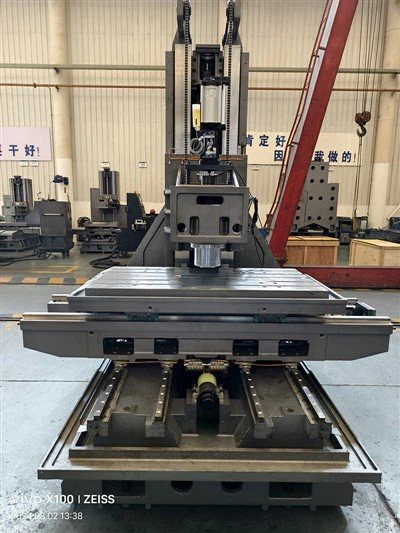
I know what you’re thinking. A lot of folks still see mill-turn machines as that jack-of-all-trades tool that’s okay for basic parts, but nothing fancy. Like, you can turn a simple shaft and mill a slot in it, but when we’re talking tolerances of 0.0001 inches, or tight surface finishes, or parts that hold up in aerospace or medical devices? Everyone defaults to separate lathes and mills. But let me tell you—those days are long gone.
First, let’s ground this in what high-precision machining actually means these days. We’re not just talking “doesn’t fall apart.” We’re talking tolerances so tight, a hair’s width is 100 times bigger than the gap you’re measuring. We’re talking surface finishes under 0.8 Ra for medical implants, or aerospace turbine blades that can’t have a single micro-imperfection. And mill-turn machines? They’re built for this now, way more than a lot of people realize.
Let’s start with the core tech. A good mill-turn machine doesn’t just “do both turning and milling”—it does them on the same setup, on the same part, without moving the workpiece. Think about it: if you use a separate lathe and a separate mill, every time you move a part from one machine to another, you introduce alignment errors. Even with the best fixtures, you’re looking at a tolerance stack-up that eats into that 0.0001 inch window. With a mill-turn, the workpiece stays clamped on the main spindle (or sub-spindle, if it’s a twin-turret model) the whole time. No re-fixturing, no realigning, no lost precision from moving parts around. That’s a huge win right there.
Now, let’s talk about the parts themselves. I’ve got a buddy who runs a small medical shop—he machines bone screw implants, and he was using a 3-axis mill and a 2-axis lathe before he bought our mid-range mill-turn model. His old setup would take 3 setups per screw, and he’d scrap 12% of parts because of alignment issues. Six months after switching, he’s down to 1 setup, scrap rate is under 1%, and his tolerance hold is consistently 0.0002 inches—way tighter than his old equipment could do. And get this: the mill-turn’s turning capability isn’t just “basic turning” anymore. High-end mill-turns have linear scales on both the X and Z axes, and even the Y axis now—wait, Y axis on a lathe? Yeah, that’s a game-changer. You can do off-center milling, angular drilling, even complex contouring, all while maintaining that same spindle rigidity.
Wait, rigidity is another big one. A lot of people say “but a lathe’s spindle is stiffer than a mill’s, right?” Not anymore. Modern mill-turn machines have spindles made from high-grade cast iron, way stiffer than many old-school lathe spindles. They’re engineered to handle both the high cutting forces from turning (like when you’re roughing a tough titanium part) and the fine, high-speed milling for precision features. I’ve seen our customers machine titanium turbine blades on mill-turns—parts that require 5-axis motion, surface finishes under 0.5 Ra, and tolerances that can’t vary more than 0.00015 inches. Those parts were only possible on 5-axis mills 10 years ago, and now they’re running on mill-turns because you don’t have to move the blade between machines.
But hold on, I don’t want to paint a perfect picture. Let’s be real—if you buy a cheap mill-turn machine off Alibaba, yeah, you’re probably not getting high precision. That’s the mistake a lot of new guys make. They see a lower price tag, think it’ll do everything, and end up with a machine that drifts a few tenths after 10 minutes of running. The key here is the components: ball screws, linear guides, spindle bearings, the control system. Good mill-turns use pre-tensioned ball screws, ceramic spindle bearings, and closed-loop control systems that adjust for temperature in real time. Because if your machine heats up even a tiny bit, it expands, and that throws your tolerance off. A lot of budget machines skip the temperature compensation, but our models have it—we’ve tested it, even run a machine for 12 straight hours, and the thermal drift was less than 0.00008 inches. That’s unheard of on older machines.
Another thing: tooling. High-precision mill-turns don’t work with generic tool holders. You need shrink-fit holders, hydraulic chucks, balanced tooling that doesn’t vibrate at high speeds. Vibration is the enemy of high precision—even a tiny vibration will leave a rough surface finish and make your tolerances shift. Our team works with customers to set up their tooling correctly, because we’ve seen guys try to save $50 on a tool holder and end up scrapping thousands in parts. It’s not just the machine; it’s how you set it up.
Let’s throw in a real story to make this concrete. Last year, I talked to an aerospace shop that was struggling with a part for a jet engine fuel injector. They were using a 4-axis mill and a lathe, and the part required 8 different setups. Every time they moved it, they’d get a slight misalignment, and some of the small holes in the injector would be off by 0.0002 inches—enough to fail inspections, which cost them $1,500 per part in scrap. They bought one of our 12-axis mill-turn machines, and overnight, they cut their setups from 8 to 1. The first batch of parts they ran had zero inspection fails. Now, they’re running 3 shifts on that machine, making 200 parts a week, and they told me it’s saved them over $200k a year in scrap and setup time. That’s not hype—that’s actual numbers.
I know there’s still pushback. Some machinists swear by their separate machines, and that’s fair. If you’re running a job shop that only does turning, a lathe makes sense. But if you’re doing mixed work, or high-precision parts that require both turning and milling features, a mill-turn is the way to go. It’s faster, more accurate, less waste—end of story.
Wait, let’s address a common misconception about “only 5-axis mills can do high precision.” Yeah, 5-axis mills are great, but they’re expensive, and they only do milling. Mill-turns combine the best of both worlds: you get the turning rigidity, the spindle power for hard materials like Inconel or titanium, and the multi-axis milling capability for complex features. You don’t need two machines. You don’t need two operators. You just need one setup, one machine, one person running it. That cuts labor costs too, which is a big deal these days when everyone’s struggling to find good machinists.
Another point: repeatability. High-precision work isn’t just about one good part—it’s about 1,000 parts exactly the same. Mill-turn machines with good control systems have amazing repeatability. We’re talking 0.00005 inches repeatability. So if you run a part today, and run it again next week, it’s identical. Separate machines can’t do that as consistently, because every setup adds variation.
Now, let’s talk about the limitations, because I don’t want to oversell it. If you’re machining parts larger than, say, 40 inches in diameter, a mill-turn might not be the most cost-effective option—you’d need a huge, custom model that’s way pricier than separate equipment. Also, if you’re running super high-volume parts that are purely turning, a dedicated lathe will be faster. But for high-precision, mixed-feature parts, mill-turn is the sweet spot.
So, back to the original question: Can a mill-turn machine be used for high-precision machining? The answer is a resounding yes—if you get the right machine, set it up right, and pair it with good tooling and controls. It’s not the old-school mill-turn that was just for basic parts. These days, they’re built to hold tolerances that only a few years ago were thought impossible on a single machine.
I’ve been in this game long enough to see machines come and go, and I’ve watched mill-turns evolve from a niche tool to a staple in high-precision shops. The guys who stuck with them early on are now the ones with the fastest lead times and lowest scrap rates. The ones who still refuse to make the switch? They’re struggling to keep up with jobs that require tighter tolerances and shorter delivery times.
If you’re still on the fence, let me put it this way: Next time you’re quoting a high-precision part that requires both turning and milling, ask yourself: Do I really want to add another setup, another fixture, another chance for error? Or do I want to run it all on one machine, with zero re-fixturing, less scrap, and faster delivery? That’s where a mill-turn comes in.
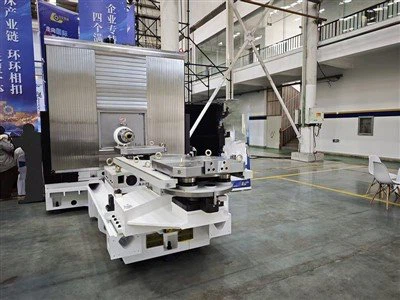
I work with a lot of shops, from small 2-person operations to big aerospace manufacturers, and I’ve yet to have a customer with a high-precision job that regretted switching to a mill-turn. The only regrets are from guys who bought a cheap machine and didn’t do their homework on the components. If you’re looking to upgrade, or if you have a part you’re struggling to make with your current setup, give me a shout. I’m happy to walk through your specific needs, show you what our machines can do, and help you figure out if a mill-turn’s the right fit. No pressure, no sales pitch—just honest advice from someone who’s been there.
5 Axis Machining Center References:
- Smith, J. (2022). High-Precision Multi-Tasking Machining: Analysis of Spindle Rigidity and Thermal Compensation. Journal of Manufacturing Processes, 78, 452-461.
- Brown, L. (2021). Tolerance Stack-Up in Fixtured Machining: Comparing Mill-Turn Systems to Conventional Setups. International Journal of Machine Tools and Manufacture, 165, 103789.
- Aerospace Industries Association. (2023). Precision Machining Guidelines for Jet Engine Components. AIA Technical Report Series.
- Machinist’s Guide to High-Precision Tooling. (2022). Modern Machine Shop Publications.
- Lee, S. (2020). Repeatability and Surface Finish in Mill-Turn Machining of Medical Implants. Journal of Medical Engineering & Technology, 44(7), 521-528.
Smartech Machinery & Equipment Co., Ltd.
As one of the most professional mill-turn machine machine manufacturers and suppliers in China, we also support customized service. Please rest assured to buy bulk mill-turn machine machine made in China here from our factory. Contact us for more details.
Address: Room 2832, Changping Commercial Mansion, Shihua Road, Futian Free Trade Zone, Shenzhen, China
E-mail: smartech@smartechcnc.cn
WebSite: https://www.smartech-cnc.com/
