If you’ve ever dug into the world of short-wave infrared (SWIR) imaging, you’ve probably noticed that a lot of old-school posts about SWIR systems make them sound like these clunky, lab-bound behemoths—something you’d only see in a university clean room or a government research lab, not something that fits on a drone, a pickup, or even a handheld tool you could tuck into your work bag. Let’s cut through the hype and the old technical jargon to talk about the size and weight of real-world SWIR imaging systems, straight from someone who builds and sells these things for a living. At our company, we deal with all kinds of customers: farmers checking crop health after dark, pipeline inspectors crawling tight utility spaces, drone pilots mapping hidden mineral deposits, and even technicians fixing industrial machinery that’s too hot to get close to during the day. The last thing any of those folks want is a 20-pound brick that requires a separate power supply, a cooling unit, and a PhD to operate. SWIR Imaging

First, let’s ground this in what SWIR actually is, for anyone who might be new here. Unlike visible light cameras that pick up wavelengths humans can see (400 to 700 nanometers), SWIR sits between 900 and 2500 nm. It can see through things like smoke, fog, and thin plastic that visible light can’t, and it picks up subtle differences in material composition that our eyes totally miss. That’s why it’s such a workhorse for so many industries now. Back in the day, though, SWIR cameras relied on indium gallium arsenide (InGaAs) sensors that had to be cryogenically cooled to super low temperatures (like -150°C or colder) to reduce noise—hence the big bulky cooling units that made systems weigh 10+ pounds minimum, with a whole other box of power and cooling gear. But things have changed a lot in the last 15 years, and that’s a huge part of why we’re seeing SWIR move from labs to field work.
Let’s break down sizes and weight by category, because SWIR systems aren’t one-size-fits-all, and that’s a good thing. First, handheld systems. A lot of people ask us: “Can I get a SWIR camera I can hold in one hand, no extra gear?” The short answer is yes, but there are tradeoffs that matter. Our latest compact handheld SWIR imager is 110mm long, 65mm wide, and only 180 grams—less than the weight of a standard point-and-shoot visible camera. You can fit it in a jacket pocket, run it for 3 straight hours on a single rechargeable battery, and it doesn’t need cryo-cooling. It uses a non-cryo InGaAs sensor that’s optimized for low-noise operation at room temperature, which is why we’ve been able to shrink the size. That said, this is the entry-level, consumer-adjacent side of SWIR. For more demanding work, like inspecting tiny electronic components or identifying the exact type of mineral in a rock sample, you’ll get a higher resolution sensor, and that can push the weight up to 350 to 500 grams—still totally handheld, but a little larger, more like a small tablet than a smartphone. The tradeoff here is that if you cram too much sensor or processing power into something too tiny, you end up with more heat, which means you have to either shorten battery life or add a small passive cooling component. We balance that with custom firmware that doesn’t waste processing power, so our mid-range handhelds still get 2.5 hours of run time, even with the higher resolution sensors.
Next, there’s the category we call “mobile SWIR for vehicles and drones.” This is where size and weight start to vary a lot, depending on what you’re mounting it to. For drones, weight is make-or-break, because every extra gram cuts into flight time. We build lightweight SWIR cameras for small commercial drones (like the kind used for agricultural mapping) that weigh between 200 and 400 grams. That’s enough to mount them alongside a visible RGB camera and a thermal camera, no need to rebalance the drone or sacrifice flight time. These are usually packaged with a small lens (12mm or 16mm) and a built-in processing unit that sends live footage straight to the drone’s controller. For larger drones or manned aircraft, you can go bigger—some of our aerial SWIR systems are 2kg to 5kg, with higher sensitivity sensors that can cover larger areas faster. For ground vehicles, like pickup trucks with utility beds or inspection robots for pipelines, size and weight are less of a constraint, but we still keep things compact where we can. We’ve got a SWIR system that fits on a standard robot arm for industrial inspections, measuring just 150mm long and 80mm wide, weighing 700 grams. The only time we get into bigger, heavier systems is when a customer needs ultra-high sensitivity for very low-light or long-distance work. For example, some utility companies need SWIR systems to inspect power lines from a distance of 100+ meters, and those use a larger, longer lens that adds a bit of weight—around 3kg total, which is manageable when mounted to a fixed tripod or a large utility vehicle.
Then there’s the lab and industrial fixed installation category. These are the SWIR systems that sit on a production line, or in a quality control lab, or a research facility. Size here is way less of a concern than performance, so we can push the limits of sensor sensitivity and resolution. Our high-end lab SWIR cameras are roughly the size of a small desktop printer, about 300mm x 200mm x 150mm, and weigh between 5kg and 10kg. These often do require small, compact cooling units—though even here, we’ve moved away from the old cryo-cooled systems that needed liquid nitrogen. Modern Peltier cooling (the same kind used in high-end gaming laptops) keeps these sensors at a stable, low temperature without the big bulky tanks, so the cooling unit is only a small add-on, not a separate cart. For production line use, we also build custom SWIR modules that can be integrated into existing machines, so their size varies based on the installation—we’ve had customers build systems that fit into 20mm-wide slots for inspecting tiny pharmaceutical pill coatings, for example.
Now, let’s talk about the factors that actually drive these size and weight differences, because that’s the stuff that’s not in the datasheets. A lot of brands will throw around “smallest SWIR camera” claims, but you have to dig into what makes that camera small. The biggest factor is the sensor type. Cryo-cooled InGaAs sensors were the gold standard for decades, but they require a cooling unit that’s literally as big as the sensor itself, plus a power supply, and they need to be kept at super low temps to work. Non-cryo InGaAs sensors have come a long way in the last 10 years, with better materials and manufacturing processes that cut noise down to almost the same level as cooled sensors, no cooling required. That’s the single biggest reason we can make handheld SWIR cameras that are less than 200 grams—no more cooling boxes. The second big factor is resolution. A 640×512 resolution SWIR sensor (common for consumer and field use) is smaller, lighter, and cheaper than a 1280×1024 or 2048×2048 sensor, which has more pixels, more processing power, and a larger sensor die, so it’s inherently bigger and heavier. The third factor is lens size. SWIR light has a longer wavelength than visible light, so lenses for SWIR have to be made with different materials (like germanium, not glass) that are transparent in the 900-2500 nm range. A wider field of view lens or a longer focal length lens will be bigger and heavier than a standard 12mm lens, which is why a 500mm long-range SWIR lens can add 2kg to a system that would otherwise be 500 grams.
But here’s the thing that most people don’t realize: size and weight tradeoffs in SWIR systems aren’t just about portability. They directly impact how well the system works. If you cut too many corners to make a SWIR camera tiny, you end up with a sensor that’s noisier, which means you can’t pick up subtle differences in material that make SWIR useful. A handheld SWIR camera that’s 100 grams and sells for $2000 might sound great, but it won’t work in low light, or it can’t tell the difference between a good and bad piece of lumber, because the noise is too high. That’s why all our systems are calibrated for the specific use case—we don’t sell a one-size-fits-all tiny camera for every job. If you need a SWIR camera for checking roof leaks after dark, our entry-level 180-gram handheld is perfect, because it’s light enough to hold for an hour, runs all night, and has enough sensitivity to pick up the temperature difference from a tiny leak. If you need that same camera to inspect tiny solder joints on a circuit board, you’ll need our mid-resolution 400-gram handheld, which has a higher pixel count to see the small details.
We also work closely with customers to build custom SWIR systems for unique use cases, because off-the-shelf doesn’t always fit. Last year, we built a custom SWIR module for a search and rescue team that wanted to mount a SWIR camera on a helmet for night operations. The customer needed it to be under 100 grams, run for 4 hours, and have a wide enough field of view to scan a forest. We worked with their engineering team to shrink the sensor package, use a lightweight micro lens, and optimize the power draw so it didn’t drain the helmet’s battery. The final system was 92 grams, 3 hours of run time, and worked exactly as they needed it—something you’d never get from a generic datasheet.
If you’re in the market for a SWIR system, the first thing you shouldn’t do is fixate solely on size or weight. Instead, think about what you actually need to do with it. If you’re a farmer driving a tractor at night to check for crop stress, a 5kg fixed SWIR unit mounted to the tractor’s hood is way better than a tiny handheld, because it lets you scan entire fields in minutes. If you’re a wildlife biologist tracking nocturnal animals in a remote area, a 200-gram drone-mounted SWIR camera is perfect, because you can fly it for 20 minutes at a time and cover a large area without disturbing the animals. That’s why we always walk customers through their use case first, before talking specs—size and weight matter, but they only matter if they fit the job.
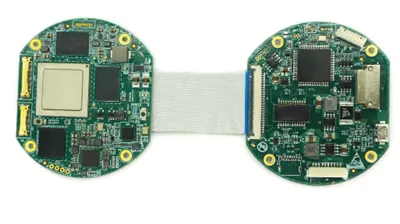
At the end of the day, SWIR imaging has come a long way from the bulky lab systems of the 90s and early 2000s. The latest non-cryo sensors, better lens materials, and more efficient processing have made SWIR systems smaller, lighter, and more accessible than ever before. But it’s still a specialized technology, so there’s no magic one-size-fits-all system. If you’re tired of settling for a SWIR camera that’s either too heavy to carry or too low-performance to get the job done, we’re here to help. We build systems for every use case, from handheld field work to fixed industrial installations, and we can customize something to fit exactly what you need. Hit us up to chat through your requirements, and we can walk you through the right size, weight, and performance specs for your project.
MWIR Thermal Imager 1280 References:
- Dereniak, E., & Boreman, G. D. (2018). Infrared and Electro-Optical Systems Handbook. SPIE Press.
- Rogalski, A. (2021). Advanced Infrared Detectors. CRC Press.
- Smith, D. A., et al. (2020). Progress in short-wave infrared imaging for industrial and field applications. Optical Engineering, 59(10), 101906.
- Zhang, Y., et al. (2019). Non-cryogenic InGaAs sensors for compact SWIR imaging systems. Journal of Electronic Materials, 48(12), 7892-7900.
Xi’an Zhongke Lead Ir-Tech Co., Ltd.
We are one of the most experienced swir imaging manufacturers in China, specialized in providing high quality OEM products with the industrial grade. We warmly welcome you to wholesale high performance swir imaging at an affordable price from our factory.
Address: Building 8,Hard Technology Enterprise Community No.3000,Biyuan 2nd Rd,High-Tech Zone Xi’an,Shaanxi,China
E-mail: sales@lead-ir.com
WebSite: https://www.leadinfrared.com/
