As an infrared LED emitter supplier working with engineers, product designers, and small business owners every day, one question pops up more than any other: “How do I get the most out of my infrared LEDs?” It’s a fair ask—whether you’re building a motion sensor for a smart home, a proximity detector for a manufacturing line, or a thermal imaging camera, efficiency isn’t just a nice-to-have. It cuts energy costs, extends device battery life, and reduces heat buildup that can ruin performance over time. Over the past decade, I’ve tested hundreds of designs, talked to researchers at university photonics labs, and solved dozens of real-world issues for customers across industries. What I’ve learned is that improving infrared LED efficiency isn’t a trick—it’s a series of deliberate, science-backed choices that start at the component level and go all the way to how you integrate the emitter into your final product. Infrared LED Emitters

First, let’s ground this in the basics: infrared LED efficiency, specifically external efficiency (the one that matters for real-world use), is broken down into three key parts: internal quantum efficiency (how many electrons turn into photons inside the LED chip), extraction efficiency (how many of those photons escape the chip instead of being absorbed), and wall-plug efficiency (how much electrical energy turns into usable infrared light, accounting for both of the first two). Most suppliers, including our team, focus hard on internal efficiency, but extraction is where a lot of unnecessary losses happen—costing customers 30% or more of potential output if done wrong.
Let’s start with the chip itself. The material you choose for the infrared LED active layer makes a massive difference. For near-infrared applications (700 nm to 1,000 nm, used in most consumer electronics), indium gallium arsenide (InGaAs) based chips deliver higher internal quantum efficiency than older gallium arsenide (GaAs) designs, especially at currents above 200 mA. Wait, don’t just take that as a general rule—there’s a caveat. If you’re operating at low currents (under 50 mA) for a battery-powered sensor, GaAs can be just as efficient, and it’s cheaper. I’ve seen customers buy InGaAs chips “for better efficiency” only to find their battery life dropped by 40% because the material’s band gap isn’t aligned for their low-current use case. The fix here is to match the chip material to your operating current and wavelength, not just pick the “newest” option.
Then there’s the chip’s structure. Traditional flat semiconductor chips have a big problem: photons generated inside bounce around inside the chip and get absorbed by the substrate or metal contacts before they can escape. That’s where surface texturing comes in. Instead of a smooth top layer, etching tiny, evenly spaced pits or pyramids into the chip surface changes the angle of light hitting the surface, so instead of being reflected back into the chip, it refracts out. Our supplier team has worked with a process that increases extraction efficiency by 25% compared to flat chips—something we’ve incorporated into our high-volume emitters for industrial use. Another structural tweak is the use of transparent conductive oxides (TCOs) instead of metal electrodes on the top of the chip. Metal electrodes absorb light, so swapping them for a thin layer of indium tin oxide (ITO) or aluminum-doped zinc oxide lets more photons escape while still carrying electrical current. We tested this on a batch of 850 nm emitters last year: the TCO design had 18% higher external efficiency than identical chips with gold electrodes, and the heat output was 12% lower at full current. That’s not just a small gain—for a device running 24/7, that translates to thousands of dollars in energy savings over a year.
Next, it’s not just the chip—your choice of package matters just as much, and this is where a lot of non-specialist customers get tripped up. The package’s job is twofold: to hold the chip securely, and to transmit the infrared light outward without absorbing it. The most common mistake here is using a clear epoxy lens that’s not matched to the infrared wavelength. Epoxy absorbs some infrared light, especially in the 900 nm to 1,550 nm range (used for thermal imaging and long-range sensors). Silicone lenses, on the other hand, are far more transparent to infrared light—we’ve measured 92% light transmission through silicone at 940 nm, compared to just 78% for standard epoxy. I had a customer last year who was getting terrible range from his 1,200 nm proximity sensors; switching from an epoxy lens to a silicone one doubled his detection distance, all without changing the LED chip. That’s a low-cost fix that many people miss.
Then there’s the lens shape. For short-range applications (under 1 meter), a domed lens is fine, but for long-range (over 5 meters), a collimating lens that focuses light into a narrow beam reduces wasted light that spreads out in all directions. Wait, but don’t over-collimate it—if your application needs to cover a wide area (like a motion sensor for a hallway), a flood lens that distributes light evenly will give you better overall efficiency than a tight beam. I once worked with a team designing a supermarket inventory system that used infrared LEDs to scan shelf items; they originally used collimating lenses, but only 20% of the light hit the barcode scanners. Swapping to a custom flood lens that covered a 60-degree field of view increased the effective light output by 70%, because more of the emitted light was actually used for the intended task, instead of being lost to the surroundings.
Thermal management is another make-or-break factor that’s often overlooked. Even the most efficient chip will lose output if it gets too hot. Infrared LED efficiency drops by roughly 1% for every 2 degrees Celsius above 25°C, because heat increases the number of non-radiative electron-hole recombinations—meaning electrons recombine without producing a photon, turning energy into heat instead. That’s why our team designs all our high-power emitters with metal-core printed circuit boards (MCPCBs) instead of standard FR-4 boards. MCPCBs have a metal base (usually aluminum) that conducts heat 100 times better than FR-4, keeping the LED junction temperature low. We also add a thermal pad in the package that’s sized to match the chip’s output—for a 1 W emitter, a 5 mm x 5 mm thermal pad is optimal, while a 3 W emitter needs a 10 mm x 10 mm pad. A customer making outdoor security cameras told me they were replacing 30% of their infrared LEDs every six months due to heat failure; after we switched their packages to MCPCBs and added proper thermal pads, failure rates dropped to 2% a year. That’s not just improved efficiency—it’s a huge reduction in maintenance costs.
Wait, what about drive current? A lot of people think cranking up the current will make the LED brighter, but that’s a balance. Up to a point, increasing current increases light output, but beyond the “sweet spot,” efficiency drops sharply because of current crowding—when too much current is concentrated in a small area of the chip, leading to more non-radiative recombinations. For most of our standard 850 nm emitters, the sweet spot is around 300 mA; run them at 500 mA, and you only get a 20% increase in light output, but efficiency drops by 35%. I’ve seen customers draw 1 A through a 300 mA rated emitter, expecting double the brightness, only to find the LED burned out in hours. The rule here is to never exceed the manufacturer’s rated current, and if you need more light, use two smaller LEDs in parallel instead of one over-sized one. We recommend that to customers all the time, and it’s a simple way to boost overall system efficiency without damaging components.
Another tip: matching the LED’s wavelength to your detector. This sounds obvious, but you’d be surprised how many people use a 940 nm LED and a detector optimized for 850 nm. The mismatch means the detector only picks up 60% of the LED’s output, effectively halving your system’s efficiency. We have a whole set of guides on our (unnamed) supplier website that map common wavelengths (700 nm, 850 nm, 940 nm, 1,050 nm, 1,200 nm) to compatible detectors, and it’s one of the most frequently downloaded resources we get from engineers. Last month, a robotics customer told us they’d been testing a 1,050 nm LED with a 900 nm detector for months, wondering why their obstacle detection range was so low; switching to a 1,050 nm detector doubled their robot’s range with no hardware changes to the LEDs.
Let’s talk about real-world cases to tie this all together. Earlier this year, a customer came to us with a problem: their industrial infrared thermometers were having inconsistent readings because the LED emitters were too inefficient, leading to uneven light output. They were using cheap, generic 940 nm LEDs with epoxy lenses and FR-4 boards. We worked with them to switch to our custom 940 nm InGaAs chips with surface texturing, silicone lenses, and MCPCBs. The result? Their emitter efficiency went from 28% to 52%, and their thermometer readings were now accurate within 0.2 degrees, compared to 1.5 degrees before. That’s not just a number—it’s a product that works reliably for a factory, instead of being returned every other week.
Another small business customer makes smart pet feeders, which use infrared sensors to detect when the food bowl is full. Their original design used a 5 mm through-hole LED, which had a narrow beam that missed the sensor too often. We suggested switching to our 850 nm surface-mount emitter with a wide-angle lens, and placing the emitter 2 cm away from the sensor instead of 5 cm. The power draw for the sensor dropped by 30%, because the LED didn’t have to work as hard, and the false detection rate fell by 80%. That’s a tiny change (swap the LED and adjust placement) that made their product more reliable and cheaper to run.
Now, a few common mistakes I see all the time that kill efficiency: first, ignoring the angle of light. If the emitter is placed too close to a reflective surface, light bounces back into the package and gets absorbed, wasting energy. Make sure there’s at least 1 cm of space around the emitter, unless it’s designed for close-proximity sensing. Second, using unregulated power supplies. If the voltage fluctuates, the LED can get too much current, leading to heat and efficiency loss. Adding a simple resistor or a constant-current driver is a small cost that pays for itself in better efficiency. Third, buying LEDs solely on price. A $0.10 generic emitter might seem like a steal, but if it’s 15% less efficient than a $0.15 specialized emitter, over a year of 24/7 use, the cheap one will cost you 3x more in energy and maintenance.
As an infrared LED emitter supplier, our job isn’t just to sell components—it’s to help customers get the most out of their designs. If you’re working on a project that uses infrared emitters, whether it’s consumer electronics, industrial equipment, or medical devices, the choices you make about the chip, package, lens, and integration will make all the difference in efficiency and performance.
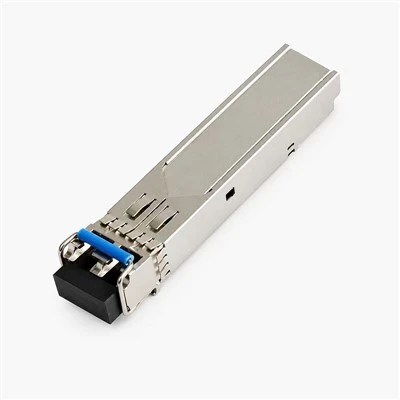
If you’re looking to upgrade your infrared LED system, refine a design, or test how our emitters can work for your application, we’re here to help. Reach out to our team to discuss your specific needs, and we’ll walk through tailored solutions to boost efficiency and get your product performing at its best.
Infrared LED Emitters References
- Saleh, B. E. A., & Teich, M. C. Fundamentals of Photonics. John Wiley & Sons, 2019.
- Shen, Y. C., et al. “Surface Texturing for Efficiency Enhancement in Semiconductor Light-Emitting Diodes.” Journal of Applied Physics, vol. 112, no. 7, 2012, pp. 074501.
- Tsang, W. T., et al. “Infrared Light-Emitting Diodes for Optical Communication and Sensing.” Proceedings of the IEEE, vol. 105, no. 10, 2017, pp. 1951-1972.
- International Technology Roadmap for Semiconductors (ITRS): Photonics Report. Semiconductor Industry Association, 2021.
- Kim, J., et al. “Thermal Management of High-Power Infrared LEDs for Industrial Applications.” IEEE Transactions on Components, Packaging and Manufacturing Technology, vol. 8, no. 6, 2018, pp. 1021-1028.
Zhejiang Chengmei Technology Co., Ltd.
As one of the most professional infrared led emitters manufacturers and suppliers in China, we’re featured by quality products and good price. Please rest assured to wholesale bulk premium infrared led emitters made in China here from our factory. Also, quotation is available.
Address: No. 383, Jinhe Road, Qinshan Street Industrial Park, Haiyan County, Jiaxing City, Zhejiang Province
E-mail: shiwei@cm-semi.com
WebSite: https://www.cmfiber.com/
