If you’ve ever stood behind a nail tech station mid-service, you’ve probably heard the soft, steady whir of a nail dust collector working in the background. For a while, I used to write that noise off as just part of the salon routine—until I started getting questions from salon owners and independent techs alike: “How much power does this thing actually use?” and “Am I going to see a huge jump in my electricity bill for running one all day?” As a nail dust collector supplier who’s talked to hundreds of users over the last eight years, I can tell you the answer isn’t as scary as a lot of salon operators think. It’s also a key detail that can help you budget for tools without the sticker shock of hidden utility costs. Nail Dust Collector

Let’s start with the basics: nail dust collectors don’t pull nearly as much power as most other small salon equipment. A typical entry-level model for home nail techs or small side hustles uses between 60 and 100 watts of power. Mid-range salon models, built for daily 8+ hour use and heavy dust accumulation, clock in between 120 and 200 watts. Even our top-of-the-line commercial units, designed for high-volume salons with multiple techs running them at once, max out around 350 watts. To put that in perspective, a standard 1500-watt hair dryer uses 15 times more power than a top-tier nail dust collector. A 50-inch flat-screen TV uses about 80 watts when in use—right in line with that entry-level model. That’s the first big myth I want to bust: nail dust collectors are not power hogs. The numbers add up fast when you look at real daily use, too.
To calculate actual monthly power consumption, we use a simple formula that most electric companies and small business owners rely on. The formula is: (Wattage of the unit × Hours of use per day × Days of use per month) ÷ 1000 = Kilowatt-hours (kWh). That’s the unit your electric company uses to bill you. Let’s plug in some common numbers to make this tangible. Say you’re a part-time tech running an entry-level 80-watt unit 4 hours a day, 20 days a month. That’s (80 × 4 × 20) ÷ 1000 = 6.4 kWh per month. At an average U.S. residential electricity rate of $0.16 per kWh, that’s about $1.02 a month. If you’re a full-time tech running a mid-range 150-watt unit 8 hours a day, 22 days a month, that’s (150 × 8 × 22) ÷ 1000 = 26.4 kWh per month, or about $4.22. Even a commercial unit running 10 hours a day, 26 days a month for a high-volume salon comes to (350 × 10 × 26) ÷ 1000 = 91 kWh per month, or about $14.56. I’ve had salon owners ask me if they should factor this into their rent or overhead, and the answer is almost always no—this is a cost so small it barely registers on most monthly utility bills.
But here’s where it gets a little nuanced: not all nail dust collectors are the same, and power usage does tie directly to performance, which is something I wish more people understood when shopping for a unit. The old adage “you get what you pay for” applies here, and a lot of cheap, no-name knockoffs cut corners on power to undercut prices. A $20 entry-level collector from a big-box store might claim 100 watts, but many of those actually run at lower voltage to save costs, which means their suction is weaker. When suction is weak, you end up running the unit longer to pick up all the nail dust—think of it like sipping juice through a narrow straw: you have to suck harder, or for longer, to get the same amount. A weak collector might need to run an extra hour a day to capture all the dust that would be picked up by a well-designed mid-range unit running at the correct wattage. That means the lower upfront cost could end up costing you more in the long run, because you’re using extra power over time.
I’ve seen this play out firsthand with customers. Last year, a salon owner in Chicago reached out to me saying her “cheap Amazon collector” had pushed her electricity bill up $30 a month, and she thought we’d overcharged for our units. When we looked at her numbers, she was running that 60-watt knockoff for 12 hours a day to compensate for weak suction, because she was still breathing in nail dust and having to clean her work station twice as often. Our mid-range 150-watt unit would have captured all that dust in 8 hours, cutting her power use by a third. That’s why I always explain to customers that power consumption isn’t just a number to check on a spec sheet—it’s tied to how effectively the unit does its main job: keeping the air clean and compliant with OSHA guidelines for nail salons.
Another common question I get is about multiple units in a salon. A lot of busy salons have two or three nail stations, each with their own collector, so I’ll break that down too. If you have three mid-range 150-watt units each running 8 hours a day, that’s (150 × 8 × 22 × 3) ÷ 1000 = 79.2 kWh per month, or about $12.67. That’s still less than the cost of running one standard space heater for a single winter month. Even if a salon has five top-tier 350-watt units running 10 hours a day, that’s (350 × 10 × 26 × 5) ÷ 1000 = 455 kWh per month, which is about $72.80 at average U.S. rates. That’s a tiny fraction of a salon’s monthly utility budget, which usually runs into hundreds or thousands of dollars for lighting, water, heating, and other equipment.
There are also a few easy tricks customers can use to cut power use even more, without sacrificing suction or air quality. First, always clean your collector’s filter and dust cup after every use—clogged filters force the motor to work harder, using more power to get the same suction. I tell all my customers to wipe their collector down, empty the dust cup, and wash the filter (if it’s reusable) at the end of each day; it takes 2 minutes and makes a huge difference in both performance and power use. Second, turn the unit off when it’s not in use. A lot of techs leave their collector running all day, even when they’re between clients or talking to customers, and that adds up over time. If you turn it on only when you’re filing or buffing nails, you can cut your daily use by 2 to 3 hours without any impact on service. Third, pick the right size unit for your needs. If you’re a part-time tech, you don’t need a commercial 350-watt unit—buying the smallest, most efficient model that fits your use case is the best way to keep power costs low.
I also want to touch on energy efficiency standards, because that’s a factor that has gotten stricter for small appliances in recent years. Most reputable nail dust collector manufacturers, including us, design units to meet Energy Star guidelines where applicable, which means they use less power than similar non-certified models to get the same or better performance. We test every unit we ship to make sure its power draw matches what’s listed on the spec sheet, so our customers don’t have surprises. Cheap knockoffs often overstate their wattage or use inefficient motors that draw more power than advertised, which is why it’s always better to buy from a trusted supplier with a track record of reliable products.
At the end of the day, when you add all these numbers up, the power consumption of a nail dust collector is such a small part of a salon’s operating costs that it shouldn’t be the deciding factor when choosing a unit. What should matter more is that the unit is powerful enough to capture the harmful silica dust that comes from acrylics, gels, and gels—dust that can cause long-term respiratory issues for both techs and clients. I’ve heard too many horror stories of techs ignoring dust collection because they were worried about power bills, only to deal with chronic allergies or even serious lung problems down the line. A $1 a month in extra power to protect your health is a no-brainer, in my book.
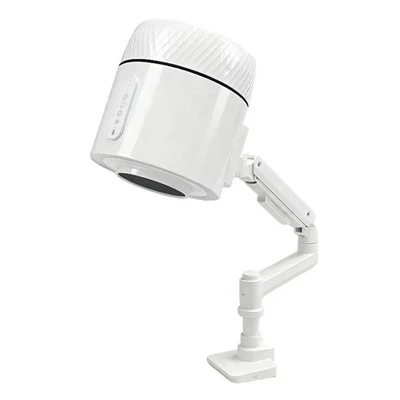
If you’re a salon owner or independent tech researching nail dust collectors, I’d encourage you to ask the supplier specific questions about power consumption, not just look for the lowest price. Ask about real-world use cases, not just spec sheet numbers, and make sure you’re buying a unit that’s designed for how long you’ll run it each day. If you’re ready to find a collector that balances efficient power use, strong suction, and reliable performance, feel free to reach out to our team to discuss your specific needs and get a customized recommendation. We’ve worked with part-time techs, small studios, and large chain salons, and we’ll help you find the right unit that fits both your budget and your requirements for clean air.
UV Led Lamp References
- U.S. Energy Information Administration. (2024). Average residential electricity prices by state. Retrieved from public utility data archives
- Occupational Safety and Health Administration. (2023). Respiratory protection guidelines for nail salons. Occupational Safety and Health Administration
- International Electrotechnical Commission. (2022). Energy efficiency standards for small electric consumer appliances. IEC Technical Report 60335-2-102
- Salon Business Association. (2023). Small business overhead costs for beauty industry professionals. Salon Business Association Annual Report
Yongkang Zorin Industry Technology Co., Ltd.
Yongkang Zorin Industry Technology Co., Ltd. is one of the most professional nail dust collector manufacturers and suppliers in China, also supports customized service. Please feel free to buy bulk premium nail dust collector in stock here and get quotation from our factory. For price consultation, contact us.
Address: No. 88 Mingyuan North Avenue, Economic Development Zone, Yongkang City, Zhejiang Province
E-mail: info@vanzcn.com
WebSite: https://www.zorindrill.com/
